
Blog
Teaching Ideas for National Climate Action Week
National Climate Action Week takes place from October 13-19th 2025, and it offers a fantastic opportunity for primary school teachers in Ireland to bring the topic of climate change into the classroom. Teaching about climate change at a young age helps foster a lifelong sense of responsibility towards the environment. The way we approach this important topic, should differ depending on the age and developmental stage of the students. Below you will find some ideas to help you plan your lessons ahead of Climate Action Week.
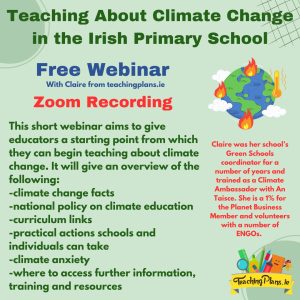
If you would like more guidance and support on planning your Climate Action Week activities, I have a completely free webinar on this topic, which you can watch a recording of by clicking here.
Junior Classes (Infants to 2nd Class)
At this young age, it’s important to lay the foundation by encouraging a love of nature and curiosity about the world around them. Fostering empathy for animals, plants, and ecosystems builds the groundwork for understanding why climate change is important.
1. Nature Walks & Outdoor Exploration
Take your class outside for a nature walk, encouraging them to observe the trees, plants, insects, and birds around them. Afterward, ask them to draw what they saw. This sparks curiosity and connects students with the natural environment. You can talk about how important it is to take care of nature because we rely on it for clean air, water, and food.
Play-based Activity: Have students pretend they are different animals or plants they saw on the walk. Ask questions like, “What do you need to live?” and “How do people help or harm your home?” This role-play helps them understand the interconnectedness of living things.
2. Storytime & Imaginative Play
Read stories that highlight the beauty of nature and the need to protect it. Books like The Lorax by Dr. Seuss can open up conversations about taking care of our planet. Afterward, students can engage in imaginative play where they act as protectors of the environment, saving trees, animals, or rivers from harm.
Play-based Activity: Create a small ‘Nature Station’ in your classroom where students can care for toy plants and animals. Include watering cans, toy insects, and seeds. They can “plant” seeds or “save” a tree from being cut down, turning abstract concepts into tangible play.
3. Class Garden or Planting Project
Start a class garden or have students plant seeds in small pots. Watching the seeds grow over time teaches patience and respect for the earth. You can explain that healthy plants are good for us and the environment because they give us oxygen and help clean the air.
Play-based Activity: Create a “Plant Care Station” where children can water, measure, and talk to their plants. You can even integrate maths by having them measure the growth of their plants each week. There are many plants that can be grown at this time of year, including garlic, onions, and broad beans outdoors, or spinach, lettuce or cress indoors.
Senior Classes (3rd to 6th Class)
Older students are ready to delve into what climate change actually is, the science behind it, and solutions. Discussions can be more structured, and you can focus on real-world problems and solutions.
1. What is Climate Change?
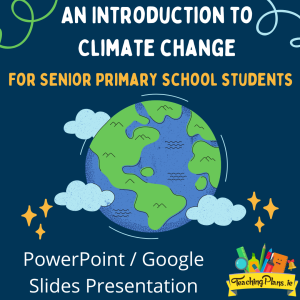
Begin with an age-appropriate introduction to climate change. Explain that it’s caused by certain gases in the air (like carbon dioxide) trapping heat from the sun. This makes the planet warmer and can change the weather, affecting animals, plants, and people. You can use teachingplans.ie’s free PowerPoint/ Google docs presentation to introduce this topic.
Activity Idea: Create a simple class experiment. You can demonstrate the greenhouse effect using two jars—one covered and one open—each with a thermometer inside. Place them under a heat source and observe which one gets warmer faster. This visual representation helps them grasp the basics of how climate change works.
2. The Impact of Climate Change
Encourage students to explore how climate change affects their world. They can research melting ice caps, rising sea levels, or extreme weather events. Discuss the impact on plants, animals, and humans. Ask questions like: “What happens to animals when it gets too hot for them to live in their usual homes?” or “What happens to farmers if there’s too little rain?”
Activity Idea: Have students create a climate change impact map. They can mark areas of the world affected by wildfires, floods, or droughts and explain how climate change may be causing these events.
3. Solutions to Climate Change
Once students understand the problems, they can explore solutions. Encourage them to brainstorm ways we can all help, like reducing waste, using less energy, and planting trees. They can research technologies like solar panels or electric cars.
Play-based Activity: Turn the classroom into a “Climate Change Workshop” where students work in teams to design a solution to climate change. One group might create a model of an eco-friendly house, another could design posters encouraging people to recycle. This allows them to apply their learning creatively.
4. Class Debate: “Can We Stop Climate Change?”
For older students, a debate can be an engaging way to delve into the complexities of climate action. Divide the class into two teams—one arguing that we can stop climate change and the other explaining the challenges. This encourages critical thinking and gives students a platform to express their opinions.
Activity Idea: After the debate, encourage students to come together and discuss a class action plan to help fight climate change in your school. This could be starting a recycling programme, a car-free day, or reducing the use of single-use plastics.
Making Climate Learning Fun and Impactful
Climate change education doesn’t have to be scary or overwhelming for young students. Through nature walks, storytelling, play-based activities, experiments, and creative projects, you can instill a sense of curiosity and responsibility. Senior students, on the other hand, can delve into the causes, impacts, and solutions in greater detail, helping them understand how their actions can make a difference.
As National Climate Action Week approaches, use this opportunity to inspire your students to become climate champions. Whether through playful exploration or thoughtful discussion, they can learn to love and protect our planet.
Finally, if you would like to explore the topic in more detail, there are a myriad of excellent resources available, including free resource packs from many NGOs. I have outlined my favourites in a separate post here.
